
2026: A year of Accessorizing
- Jan 5
- 5 min read

Let's talk about how the right accessories can change an entire outfit (and your whole mood). Accessories are rarely needed, yet they are often the difference between wearing and owning an outfit. A plain white tee and denim can read errands, but add a wrist stack, a broach, and a colorful ring, and suddenly it reads like it was strategically designed. Accessories work because they operate like punctuation in a sentence. They aren't about decoration, accessories sit between clothing and identity, quietly signaling who you are and what you pay attention to.
Accessorizing isn't new. We have been doing it for years.
Before accessories were considered styling, they were identity, status, spirituality, protection, and celebration. Archaeological and historical research shows jewelry has been worn across civilizations for thousands of years, often tied to meaning and belief systems as much as beauty. Gems and precious materials were linked to symbolism, mythology, and power in many cultures. Bracelets, specifically, have been around in forms that span millennia, bangles, beads, carved materials, and precious metals, constantly evolving with materials and taste. Antique jewelry scholars even note early use of gold beads (around 3200 BC) and stone-bead bracelet constructions in the ancient world, so when we talk about accessorizing in 2026, we are not talking about a trend that arrived, we are talking about a human habit. We decorate what we value, especially ourselves.
My take: Why accessories change everything.
Clothing is the base layer. Accessories are the personality layer. Here's what I've learned from years of paying attention to outfits.
Accessories create focal points. Eyes go to hands, necklines, and faces first. Bracelets and rings live in high-visibility zones, especially when you are talking, holding a coffee, typing, or reaching for a bag.
Accessories create contrast (secret sauce). Texture against texture. Shine against matte. Color against neutral. A beaded gemstone bracelet against a lace sleeve can be a whole vibe.
Accessories signal intention. Even one elevated piece says, "I chose this." And that is the difference between clothes you put on or styled outfits.
Accessories are the most personal part of getting dressed. It can be sentimental, symbolic, or simply "this feels like me today." That is why people rewear the same jewelry constantly, even when they rotate outfits.
From past years to 2026: what's shifting?
Recent runway and editorial coverage points to bigger, bolder accessory moments for 2026.
Maximalist accessorizing is back. More stacking, more layers, more visible styling choices. Pinterest trend reporting (as covered in fashion press) even points to increased interest in bold items like cuffs and bangles, including a noted rise in searches for gold cuffs.
Beads are having a real fashion moment again. Spring/Summer 2026 runway coverage and trend reporting call out beaded jewelry as a standout, styled in layered, colorful, "more is more" ways.
Color + mixed materials are in, including semi-precious stones paired with gold, and rich tones that pop against monochrome dressing.
This is why I keep coming back to one phrase for the year: Accessorizing is the outfit.

Why I started Meashell with bracelets.
Bracelets are the most underrated power move in jewelry, because they are both visible and wearable.
They don't require a neckline decision.
They work with sweaters, tees, blazers, silk tanks, and coats.
They photograph beautifully.
They layer endlessly, which means they evolve with you instead of locking you into one look.
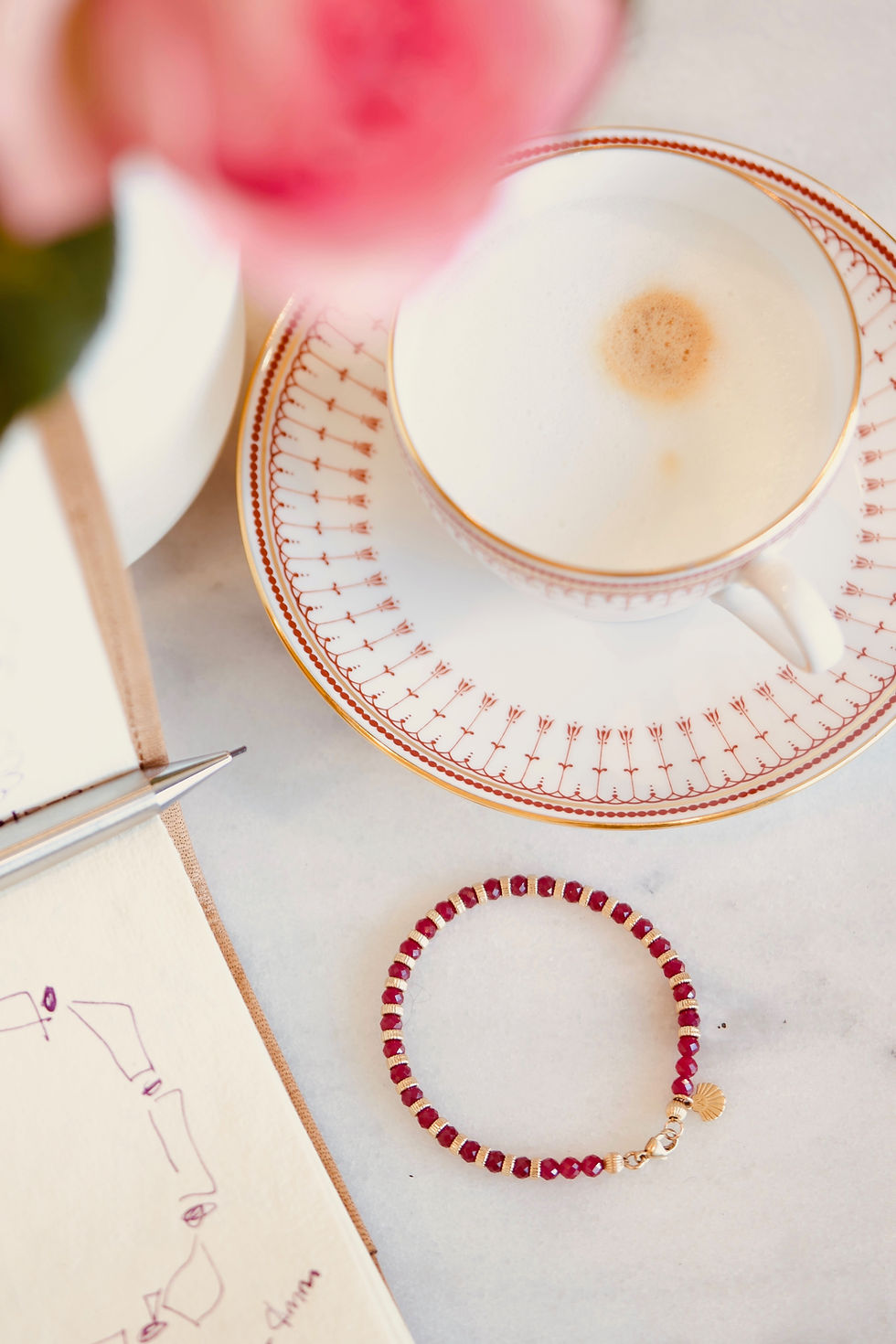
Most importantly, bracelets let you build a signature without feeling like you are trying too hard. A wrist stack can be quiet-luxury refined or sunlit and playful. Sometimes both on the same day. That is why Meashell began with beaded gemstone bracelets, using precious and semi-precious stones, set with 14K solid yellow gold and 18K solid white gold options. The beads bring color and texture; the fine gold brings permanence and elevation. Together, they create the sweet spot I care about, casual luxury.
Real data behind beaded jewelry.
Beaded jewelry isn't just a nostalgia moment. The market data suggests it is a growing category because it sits at the intersection of style, personalization, and everyday wear ease. One industry market forecasted estimates that the global beaded jewelry market was at $6.98B in 2025, and projected to grow to $13.81B by 2033 (about 8.9% CAGR). What this signals in plain English, people aren't moving on from jewelry, they are buying more of it, and they are especially drawn to categories that feel expressive, wearable, and stackable, exactly where elevated beads live.
My opinion is that people love beaded pieces, especially when they are elevated. Beaded pieces win because they do three things at once:
They bring color without committing to a whole garment. For example, add a gem color bracelet to your wrist and your neutral outfit suddenly looks styled.
They feel personal. Stones can be chosen for meaning, mood, and personality, making each piece feel uniquely one's own.
They layer beautifully. Beads can be paired with gold chains, bangles, watches, and cuffs. That is why runway styling is leaning into stacks.
Is elevated beaded jewelry an investment? Let's be honest and smart.
Jewelry value comes in two forms, financial and wardrobe ROI. Gold, as a material, has historically been treated as a store of value, and recent financial coverage shows gold prices have been usually strong, with 2025 being described as having a major surge year. Separately, resale market reporting shows certain jewelry Maisons can retain or even exceed original value on resale. Rebag, as reported by Business Insider, show Van Cleef & Arpels styles averaging 112% value retention in 2025. Most jewelry won't behave like that, but these data points support a broader truth, fine materials and enduring designs matter, especially when you want longevity.
Wardrobe ROI is usually a data point people underestimate. If a bracelet stack makes 30 outfits feel finished, that's real value. Jewelry is one of the only style purchases that can travel across seasons, sizes, phases of life without needing tailoring, closet space, or a weather forecast.
My growth view: the best jewelry investment is the one you wear constantly, because cost-per-wear (CPW) becomes unbeatable.
A simple styling blueprint for 2026
If you want accessorizing to feel exciting, but not overwhelming, try this:
Start with one anchor (a signature gemstone bracelet with color and texture).
Add one metal statement like a 14K yellow gold chain, bangle, etc.
Finish with one detail like a watch or a second bead strand for rhythm.
In general, if you are wondering what to pair with what, 2026 is giving permission to mix it up. Make your personal style your own.

What's Coming from Meashell in 2026 (a little preview)
2025 was the beginning. 2026 will get louder (in the best way). Here's what is on the horizon.
Spring collection energy. Bold, brighter, more sunlight-at-the-wrist energy.
Signature collection. Designs that read "that's Meashell" from across the room.
Bigger moments. Some pieces will be slightly larger, with more presence.
14K yellow gold chain + gemstone. It will be a refined contrast of polish and color.
Wrap bracelets made for stacking. Built for the "one more layer" vibe.
Boyfriend bracelets. Cleaner, cooler-toned, with a little architectural element added.
Accessorizing isn't about adding more. It's about adding you to the picture, so in 2026, let's accessorize like we mean it. More texture, more color, more layering, and more personalization to our style. Let's have fun with it!


Comments